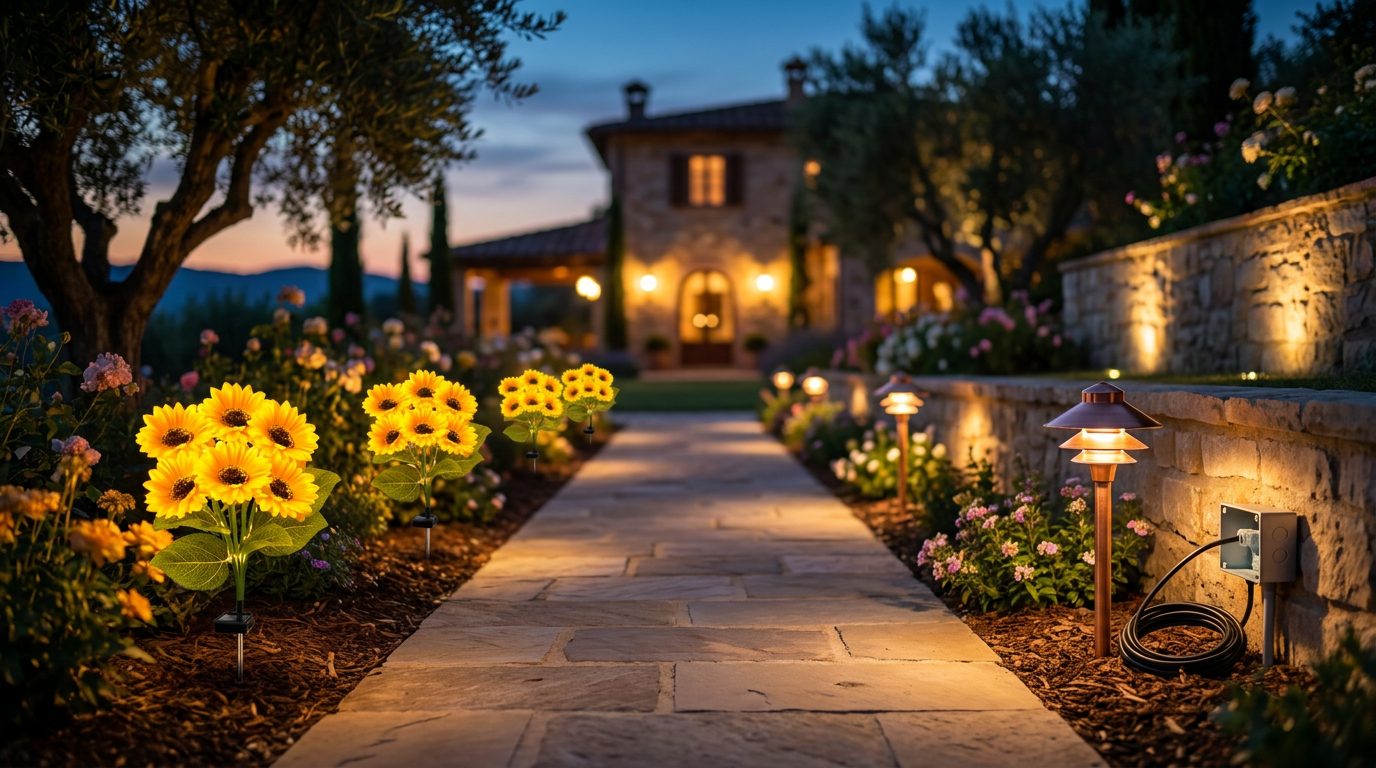
Sunflower Solar Lights vs Traditional Landscape Wiring
 Priya RamanSenior Analyst
May 30, 2026. This analysis evaluates the functional and aesthetic trade-offs between Sunflower Solar Lights and traditional hard-wired garden systems. It is designed for homeowners seeking to balance decorative appeal with operational efficiency.
Selecting the right illumination for a garden requires a matrix of three distinct variables: installation complexity, ongoing maintenance, and decorative versatility. Traditional lighting systems often rely on low-voltage transformers and buried cables, which provide high-intensity light but demand significant structural commitment. According to Waysaving, while solar lights are improving in brightness, they generally provide a softer, more atmospheric illumination compared to the high-intensity output of traditional wired systems. This distinction creates two axes that matter here: the axis of functional security versus the axis of aesthetic character. Traditional lighting is frequently anchored in a fixed position, requiring trenching that can disturb existing root systems or hardscaping. For many property owners, the barrier to entry for wired systems is not the cost of the fixtures themselves, but the labor-intensive requirement of professional electrical work or the risk of accidental cable cuts during routine gardening. Once you see it this way, the choice between these two categories becomes a question of whether you are building a permanent infrastructure or curating a living landscape that can evolve with the seasons.
Sunflower Solar Lights address these infrastructural limitations by decoupling the light source from the power grid. These fixtures utilize decorative flower patio lights solar powered outdoor technology, allowing for a localized energy cycle that begins and ends within the individual unit. Unlike traditional spotlights that require a central controller, these LED sunflower landscape lighting units operate independently. This independence allows for a high degree of placement flexibility; a homeowner can cluster these lights to create a dense floral arrangement or space them along a path to serve as solar sunflower lights for walkways. This flexibility is particularly valuable for renters or those who frequently update their garden layout. Because there are no wires to bury, the setup time is reduced from days to minutes. The integration of high-efficiency solar cells within the sunflower’s foliage ensures that the aesthetic form of the light also serves its functional purpose. By mirroring the height and shape of real flora, these lights blend into the garden during daylight hours, a feat traditional black-metal path lights rarely achieve. This dual-purpose design resolves the common design conflict where lighting hardware looks out of place in a naturalistic setting.
The decision rule for choosing between these systems depends on the specific site requirements and the desired visual outcome. If the goal is high-intensity security lighting for a large driveway, traditional wired systems remain the standard. However, for adding character, highlighting specific flower beds, and ensuring ease of use, Sunflower Solar Lights offer a superior return on effort. Before making a final selection, evaluate your outdoor space using the following framework:
- Assess the daily direct sunlight exposure in the intended installation area to ensure optimal charging.
- Determine if the lighting is intended for permanent architectural accenting or seasonal decorative enhancement.
- Evaluate the soil density to confirm if stakes can be easily inserted without trenching equipment.
- Compare the long-term electricity costs of a transformer-based system against the zero-cost operation of solar units.
- Verify the desired light temperature, as solar sunflowers typically provide a warmer, more natural glow suited for ambiance.
Shop Sunflower Solar Lights here
Sources
Photo by joao Guerreiro on Pexels
- Choosing Between Modern and Traditional Style Solar Lights for ...
- Solar Lights vs. Traditional Outdoor Lighting: Pros and Cons
- Solar vs Low Voltage Landscape Lighting Which Is Better? - YouTube