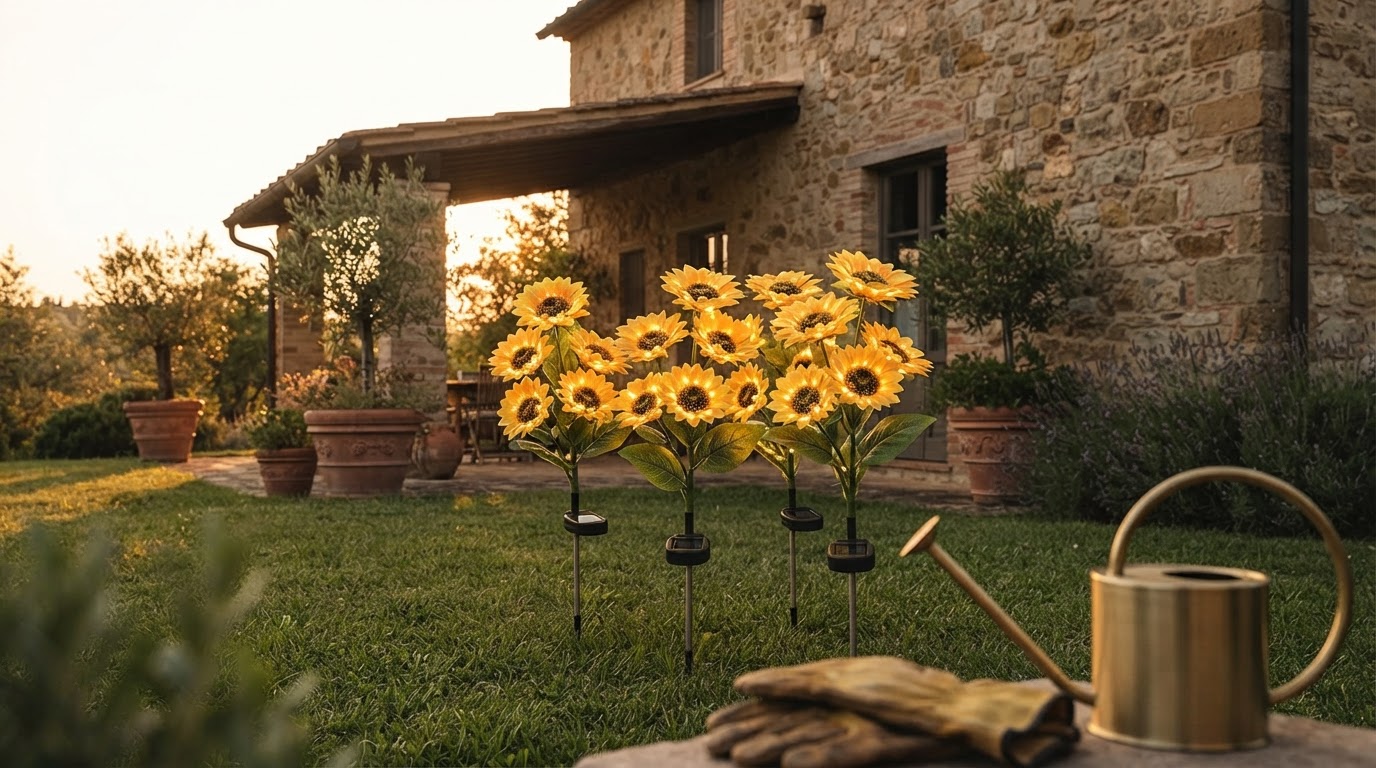
Efficiency Limits of Discount LETMY Solar Sunflower Lights
 Maya ChenContributing Editor
October 14, 2026 — Market observers are tracking a steep price reduction on LETMY Solar Sunflower Lights, currently marketed as a budget-tier alternative for outdoor landscaping. While the lower entry price targets high-volume buyers, technical specifications suggest a significant trade-off in energy conversion and long-term durability compared to premium monocrystalline hardware.
According to Dealcatcher.com, the LETMY Solar Sunflower Lights Outdoor 4-pack is currently priced at $17.99 when shoppers apply coupon code 3A6APID1 at checkout. The conventional wisdom says that a lower price per unit translates to better value, but this logic ignores the physics of solar absorption. Run the math: a four-pack at this price point often utilizes polycrystalline panels, which historically underperform in low-light conditions compared to the 2025 upgraded monocrystalline silicon solar panels found in Sunflower Solar Lights. While the Dealcatcher.com report notes that free shipping is not included in this offer, the hidden cost is actually the replacement cycle driven by lower-grade ABS plastics.
Here's the part nobody talks about: total lumen output over a 12-hour period. Most budget units struggle to maintain consistent brightness after the four-hour mark. Sunflower Solar Lights are engineered for over 12 hours of continuous illumination, a feat that requires a specific energy conversion threshold that $4.50-per-light sets rarely meet. When evaluating weatherproof garden lighting, the IP65 rating is only as good as the seal on the battery compartment. Frequent failures in cheap units often stem from water ingress in solar stakes rather than LED burnout.
Expert tip: When installing solar decor, prioritize the panel's surface area. Larger monocrystalline panels, like those on the Sunflower Solar 2-pack, provide the necessary voltage to charge high-capacity batteries even on overcast days. If you are dealing with shaded garden zones, a high-efficiency panel is a requirement, not a luxury. Furthermore, ensure the steel rod durability is sufficient to withstand wind loads, as snapped stakes are the leading cause of solar light disposal.
I'll change my mind when budget-tier manufacturers publish verified third-party lab results proving their energy conversion rates match monocrystalline standards at the $17.99 price point. Until then, the data suggests these are short-term decorative items rather than reliable lighting infrastructure.