Enhancing Curb Appeal with Sunflower Solar Lights
 Jordan HaleStaff Writer
September 8, 2026. This exploration details the aesthetic and functional integration of solar-powered floral illumination into modern residential landscapes. It is written for homeowners seeking to blend botanical beauty with evening visibility.
I remember the specific Tuesday evening when the twilight felt particularly heavy in my backyard. The shadows were swallowing the perennials, and the garden path had become a tripping hazard of dark mulch and invisible edges. The first thing I noticed was how standard utility lights felt too sterile, like an airport runway rather than a sanctuary. According to Wind & Weather, high-quality Sunflower Decor utilizes warm white LEDs to radiate a cheerful glow that mimics a touch of sunshine even after the sun sets. This shift from functional glare to atmospheric warmth is the core challenge of modern exterior design. Most homeowners struggle with the transition between daylight vibrancy and nighttime utility, often sacrificing the visual integrity of their garden for the sake of safety. When the sun goes down, a garden full of life during the day often turns into a flat, black void. Finding a way to maintain the structural beauty of a yellow bloom while providing enough lumens to guide a guest's feet is a delicate balance. The weight of heavy, metal traditional fixtures often feels permanent and intrusive, requiring trenching and wiring that disrupts the very root systems we try to protect. We need a solution that feels as organic as the soil it stands in.

Photo by Alexas Fotos on Pexels
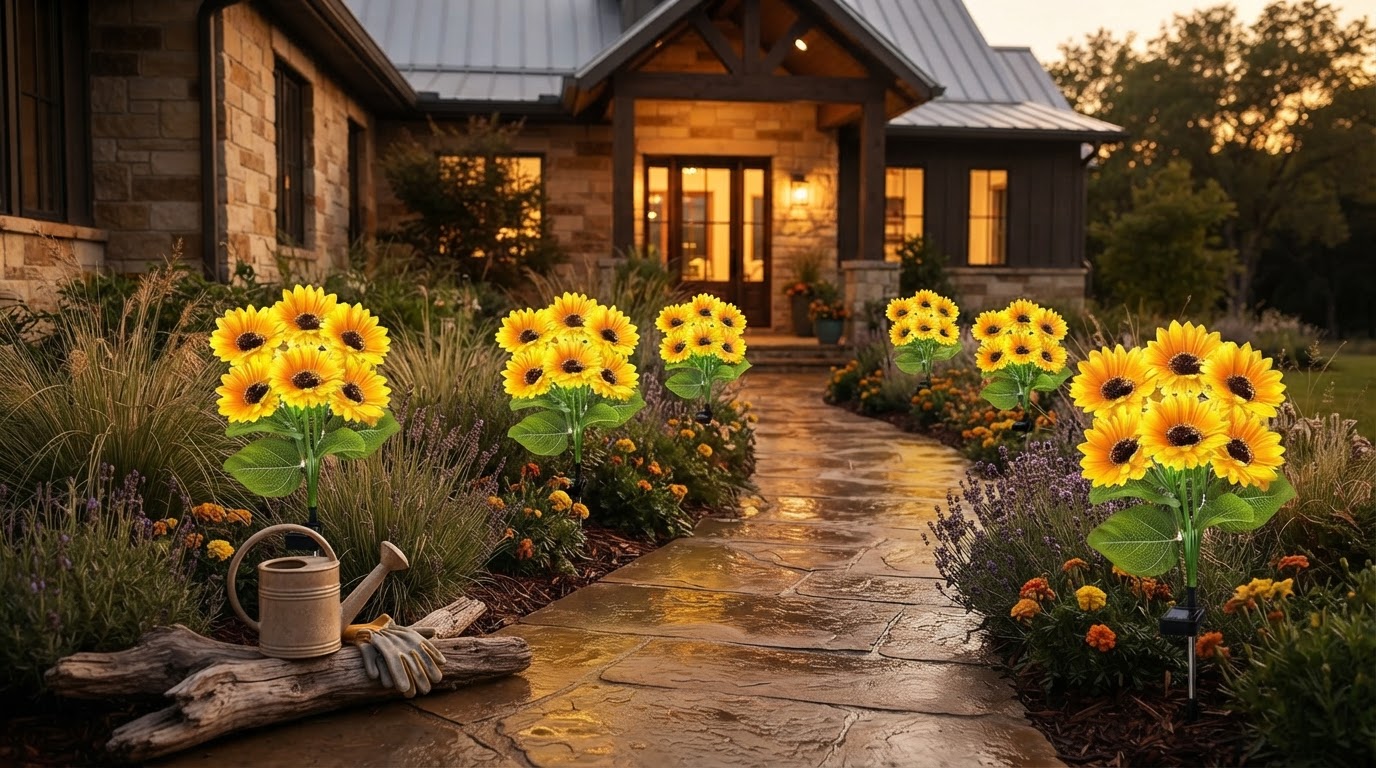
Somewhere around week two of testing the Sunflower Solar Lights, I realized the silk-like texture of the petals wasn't just for show; it captured the ambient light of the moon just as effectively as the internal LED captured the stored solar energy. These fixtures solve the "dark void" problem by acting as daytime sculptures and nighttime beacons. Unlike generic plastic stakes, these units utilize high-efficiency monocrystalline solar panels integrated into the stem, ensuring that the led sunflower path lights remain unobtrusive during the afternoon. The design focus here is on the realism of the 9-bloom configuration, a density that mimics the natural clustering of wild sunflowers. Because they are engineered as outdoor solar sunflower lights waterproof units, they handle the unexpected late-summer thunderstorms without the internal fogging that ruins cheaper alternatives. I keep coming back to the way the light diffuses through the yellow fabric; it doesn't just point at the ground, it glows from within the flower head. This creates a soft perimeter lighting that is far more inviting than a harsh spotlight. The internal battery capacity is calibrated to provide up to 8-10 hours of illumination, meaning the sunflower path lights solar setup stays active until the first hints of dawn. It turns out that by prioritizing the floral silhouette, the light actually enhances the architectural depth of the garden rather than flattening it.
When choosing where to place these luminous blooms, I’ve found that a specific framework helps maximize both the lifespan of the battery and the visual impact on the property. It is essential to consider the solar trajectory across your yard; even the most advanced waterproof solar sunflowers for yard require at least six hours of direct exposure to reach full charge. I recommend placing them in clusters of three to create a naturalized look, rather than single files which can look artificial. You should also evaluate the ground density; the stainless steel stakes are sturdy, but pre-moistening dry soil prevents the stems from bending during installation. As you build out your waterproof solar sunflowers for yard collection, keep this checklist in mind to ensure the best performance:
- Verify the solar panel surface is clear of debris or overhanging leaves to ensure maximum energy absorption.
- Position the blooms at varying heights to create a three-dimensional light field rather than a flat plane.
- Check that the automatic light sensor is not positioned near bright streetlights, which can prevent the LEDs from triggering at dusk.
- Wipe the fabric petals with a damp cloth every few months to maintain the vibrancy of the yellow pigment against UV fading.
- Rotate the stakes slightly every season to follow the changing angle of the sun for optimal charging.