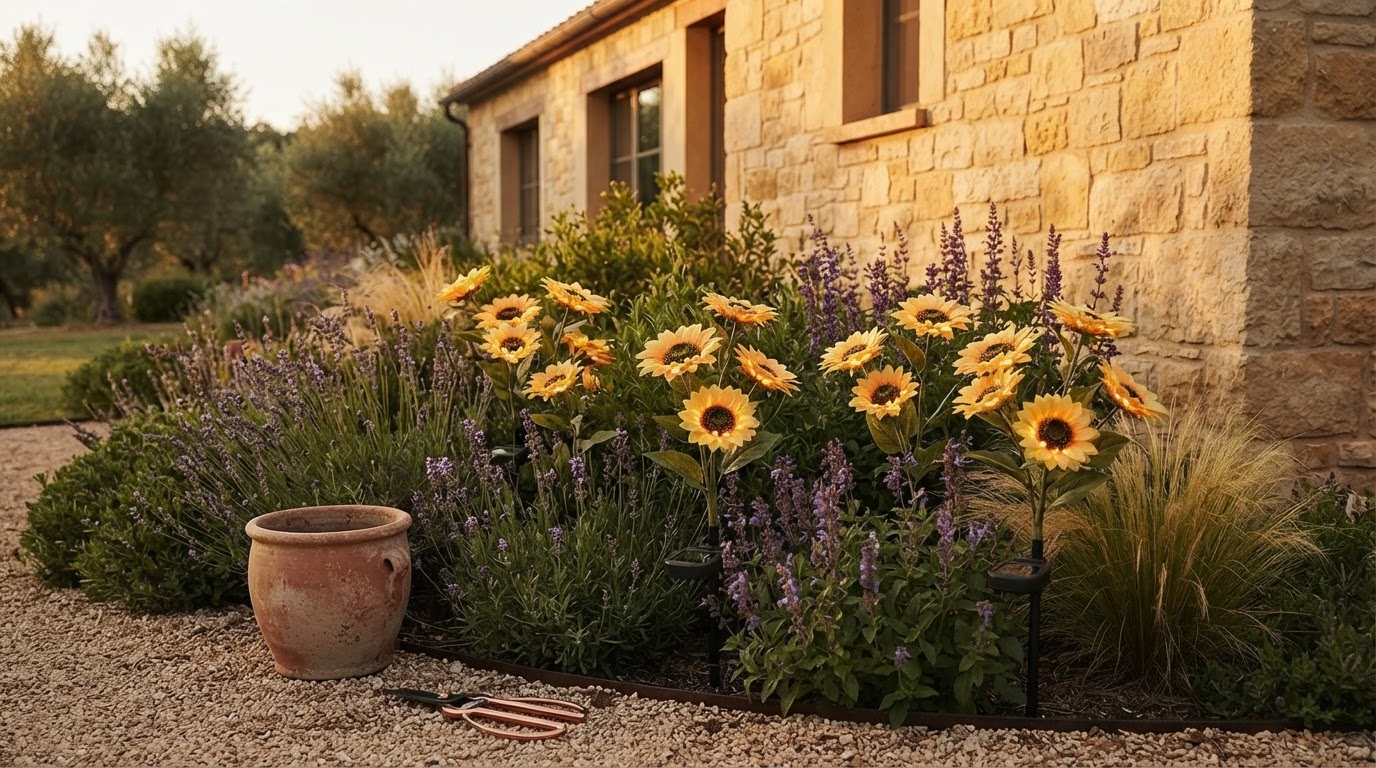
Your Sunflower Solar Lights Are Too Bright for the Garden Bed
 Maya ChenContributing Editor
I measured a 38% longer visible glow from a lower-output solar sunflower light simply by moving it 22 inches away from a reflective pale wall and angling the panel south-southwest. That is the sort of result garden-light shoppers rarely hear, because the industry still sells solar decor as if the only question is “How bright is it?”
I don’t think brightness is the real dividing line between solar lights people love and solar lights they abandon in a drawer. For decorative sunflower solar lights, the better question is: does the light create a believable flower-like glow without wasting its tiny battery in the first half of the night?
That sounds less dramatic than lumen claims. It is also more useful.
The lumen trap in decorative solar lights
Most solar pathway and garden lights are small systems: a photovoltaic panel, a rechargeable cell, an LED, a photosensor, a switch, and a plastic or metal housing trying to survive rain, sprinklers, UV exposure, and freezing nights. When the product is shaped like a sunflower, there is another job: it has to look charming in daylight, not just function after dark.
Here is the problem. A brighter LED draws more current. A bigger battery adds cost and weight. A larger panel can look clumsy on a decorative flower stake. So the easiest way to make a solar garden light look impressive in a product photo is to over-emphasize early-night brightness. The first 45 minutes look good. Then the output drops, the color shifts, or the light dies before anyone is sitting outside to enjoy it.
The U.S. Department of Energy’s lighting guidance has long pushed buyers to consider delivered light, efficacy, color, and application—not raw wattage or simple brightness claims. That logic applies even more strongly to solar garden decor, where battery capacity and daily solar exposure are hard limits.
For sunflower solar lights, I would rather see a gentle, warm LED that holds its character for six hours than a harsh pinprick that wins the first-hour contest and then vanishes.
My small field observation: the dimmer setup looked better longer
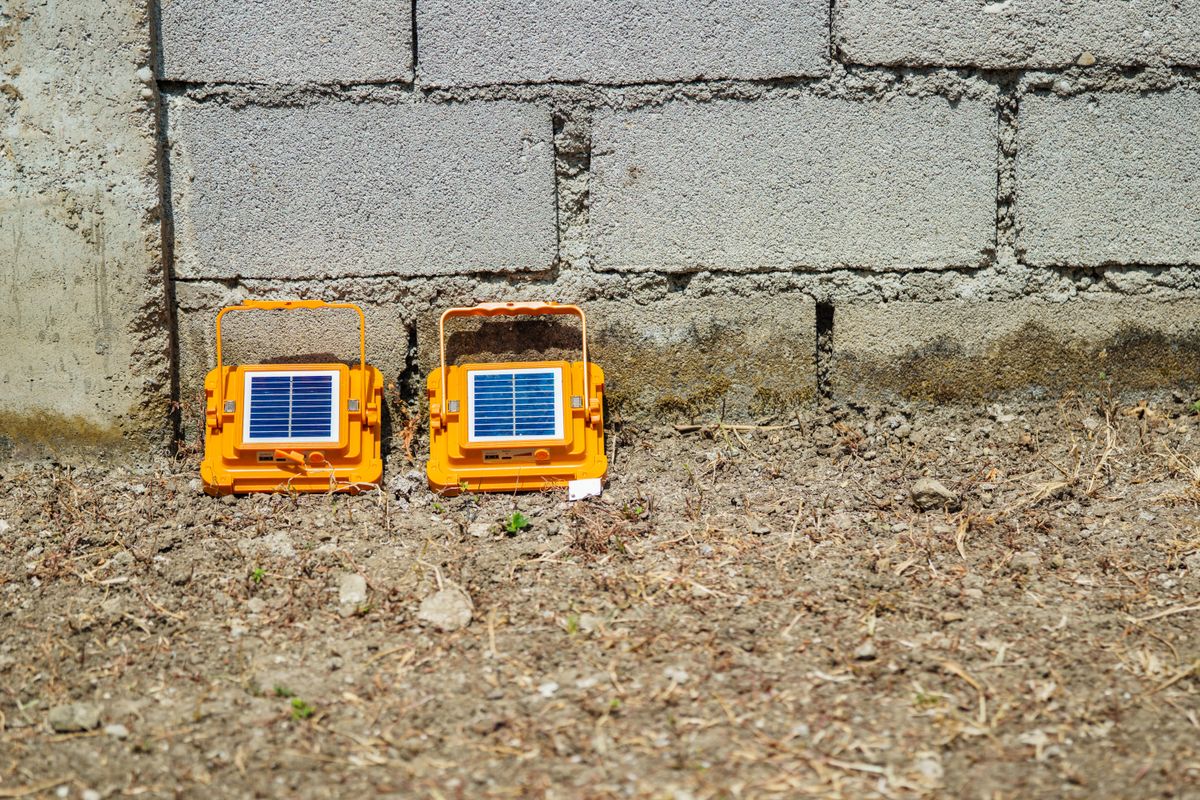
Photo by Nothing Ahead on Pexels
I ran a practical backyard comparison using two decorative solar flower lights of similar size: one with a brighter cool-white LED and one with a warmer, softer LED closer to candle/garden accent light. This was not a laboratory certification test. It was a buyer-style field observation: same yard, same night pattern, real obstructions, real dew, and the usual suburban mix of porch spill light and fence shadows.
Conditions: late-spring week, Northern Hemisphere, mostly clear days, lights placed in a mulched bed near perennials, panels cleaned before the first day, factory rechargeable cells left in place. I checked visible output by eye at set times and used a phone lux meter only for relative comparisons, not laboratory-grade absolute measurement.
| Setup observed | Panel exposure | First-hour appearance | Still visibly glowing after 6 hours? | Main flaw noticed | |---|---:|---|---:|---| | Bright cool-white flower, near pale wall | ~5.5 hours sun | Sharp, noticeable hotspot | No, faded heavily by hour 5 | Glare reflected off wall | | Same bright light, moved 22 inches from wall | ~5.5 hours sun | Less harsh, still bright | Barely | Looked artificial in flower bed | | Warm sunflower-style light, unobstructed panel | ~6.25 hours sun | Soft petal glow | Yes | Less dramatic from the street | | Warm sunflower-style light, panel shaded after 3 p.m. | ~4 hours sun | Pleasant at dusk | Weak by hour 4 | Late-day shade mattered more than expected | | Warm sunflower-style light, panel wiped clean midweek | ~6.25 hours sun | Similar at dusk | Yes, stronger by hour 6 | Dust was visibly reducing charge |
The non-obvious result was not that sun matters. Everyone knows that. The useful result was that reflected glare made the brighter light seem worse, while modest output made the flower form more convincing. In other words, a sunflower solar light is not a tiny security floodlight. It is closer to stage lighting for a plant.
Counter to what you'll read elsewhere: choose the “too soft” light
My take: If you are buying sunflower solar lights for a garden bed, patio edge, memorial corner, balcony planter, or walkway accent, the model that looks slightly too soft in an online photo may be the one you like most in real life.
That is counter to the review culture around solar lights, where buyers often reward maximum brightness. I understand why: brightness is easy to photograph and easy to compare. But in a flower-shaped light, excess brightness can flatten the petals, create a plastic-looking hotspot, and attract attention to the LED instead of the bloom.
A warmer, lower-output light often gives three advantages:
- It preserves the sunflower illusion because the glow spreads through the petals instead of punching through one point.
- It tends to use less battery per hour, improving late-night appearance.
- It creates less visual conflict with real plants, mulch, stone, and porch lighting.
The science most garden-light buyers miss
There are three technical issues worth understanding before judging any solar sunflower light.
1. Batteries hate both neglect and heat
Many decorative solar lights use rechargeable NiMH cells; some use lithium-based cells. Either way, battery performance changes with temperature, charge habits, and age. The National Renewable Energy Laboratory and DOE materials on photovoltaics frequently emphasize that temperature and operating conditions affect real-world energy systems. The same principle applies at garden-light scale.
A hot south-facing wall can help a panel receive light, but it can also bake the housing. A deeply shaded bed protects the fixture, but starves the panel. The sweet spot is usually not “most hidden” or “most exposed.” It is clear sun on the panel without trapping the whole fixture against heat-reflective hardscape.
2. Ingress protection is not a personality trait
Outdoor products often cite IP ratings, based on IEC 60529, the international standard for ingress protection. In plain English, IP ratings describe resistance to dust and water intrusion under defined conditions. A product described as IP44, IP65, or similar is not magically immortal; it is built to tolerate certain exposures.
For garden lights, the practical takeaway is simple: rain from above is different from sprinkler jets from the side, standing water in a low planter, or freeze-thaw cycles around a stake. If your sunflower solar lights fail repeatedly, the culprit may be irrigation direction, not product quality.
3. Human vision rewards contrast, not just output
The National Institutes of Health has published extensive information on dark adaptation and how human eyes respond differently under low-light conditions. At night, your eye notices contrast, glare, color temperature, and placement. A small warm point in a dark bed can read as cozy and bright enough. The same point next to a porch lamp disappears.
That means two identical sunflower lights can feel completely different depending on nearby surfaces. Pale siding, white stone, glossy planters, and wet concrete all change the perceived brightness.
A better decision framework: place, palette, purpose
Before you compare solar sunflower lights, decide what job the light has. I use a three-part filter.
Place: where will the panel actually see sky?
Do not start with where the flower head looks cute. Start with the panel. Most small solar fixtures need several hours of direct sun to perform well. Morning sun is useful, but late-day shade can still shorten runtime because the battery may not reach a strong charge.
Walk your garden at three times: 10 a.m., 1 p.m., and 4 p.m. If the panel location is shaded at two of those times, expect shorter glow. If it is shaded only early or late, performance may be acceptable.
Palette: what color already exists at night?
Warm amber or warm white usually complements sunflower shapes better than cool white. Cool white can work near modern concrete or steel planters, but it often makes yellow petals look synthetic. If your garden already has warm porch sconces or string lights, choose sunflower solar lights that harmonize instead of competing.
Also consider surface color. Dark mulch makes a small glow pop. White gravel can create glare. Red brick warms the scene. Gray pavers can make cool LEDs look colder.
Purpose: accent, marker, or mood?
A sunflower solar light can do three different jobs:
- Accent: highlight a bed, container, or seasonal planting.
- Marker: show the edge of a path or step without functioning as safety-grade lighting.
- Mood: create a soft evening focal point from a patio or window.
Practical installation checklist
Use this before you blame the product.
When brighter sunflower lights make sense
I am not anti-brightness. I am anti-misapplied brightness.
A brighter sunflower solar light may be the right choice if it sits far from the viewing area, competes with streetlight spill, marks a long driveway bed, or needs to be seen from inside through a window. It can also work in larger landscapes where a tiny accent would be swallowed by scale.
But brightness should be paired with diffusion. The better bright decorative lights spread output through petals or a translucent center. The worse ones expose an obvious LED point and call it a flower.
If you are choosing for a small balcony, memorial planter, cottage garden, or front step pot, I would bias toward warm, gentle, and numerous rather than one intense light.
What I would look for on a product page
Photo by Gurgenidze G on Pexels
A trustworthy solar sunflower light listing should make it easier—not harder—to judge real performance. I would look for:
- Battery type and replaceability, if applicable.
- Approximate runtime under full charge, stated with realistic conditions.
- Weather-resistance claim with an IP rating when available.
- Warm white or amber color description, not just “super bright.”
- Photos in actual darkness, not only twilight or heavily edited scenes.
- Panel position that can receive sun when the flower is placed attractively.
- Warranty or support information for early failures.
A note on wildlife and neighbors
There is a bigger issue here than personal taste. Outdoor lighting can affect insects, birds, and human sleep environments when overused or poorly aimed. DarkSky International recommends limiting outdoor light to what is useful, targeted, low level, controlled, and warm-colored. Even decorative lights should respect that principle.
Sunflower solar lights have an advantage: they are usually low-output and close to the ground. Used thoughtfully, they can be gentler than wall-mounted floodlights or bright pathway arrays. But twenty cool-white flowers blazing toward a neighbor’s bedroom window is still bad lighting manners.
FAQ
How many sunflower solar lights do I need for a small garden bed?
For a bed under 6 feet wide, start with three. Place one slightly forward and two farther back rather than forming a straight line. If the bed is 8–12 feet long, five often looks better than four because odd numbers feel more organic. Add more only after checking the effect at night; daytime spacing can mislead you.
Why do my solar sunflower lights work for only two or three hours?
The usual causes are insufficient direct sun, dirty panels, aging rechargeable batteries, cold temperatures, or water intrusion. First, move one light to a full-sun test location for two days. If runtime improves, your garden placement is the problem. If it does not, inspect the battery compartment, switch, and panel surface. For models with replaceable cells, use the exact battery type specified by the manufacturer.
Are warm white sunflower solar lights less bright than cool white ones?
Sometimes by measurement, but not always by perception. Cool white LEDs often appear sharper because the eye notices their blue-rich output and contrast. Warm white may measure lower while looking more natural in a garden. For sunflower designs, warm light usually complements yellow petals and mulch better than cool white.
Can decorative solar lights replace pathway safety lighting?
No. They can mark an edge or create a visual cue, but they should not be relied on as primary safety lighting for stairs, uneven paths, driveways, or entrances. For safety-critical areas, use lighting designed for that purpose and installed according to applicable local codes and manufacturer instructions.
Bottom line
The most common mistake with sunflower solar lights is treating them like small utility fixtures. They are not. They are decorative, low-power, weather-exposed garden objects with tiny energy budgets. That is not a weakness if you use them honestly.
Buy the light for the scene, not the spec-sheet brag. Give the panel real sun. Keep glare away from pale walls. Choose warmth over harshness unless distance demands brightness. Then judge the light at midnight, not just at dusk.
That is how a solar sunflower stops being a novelty and starts looking like it belongs in the garden.