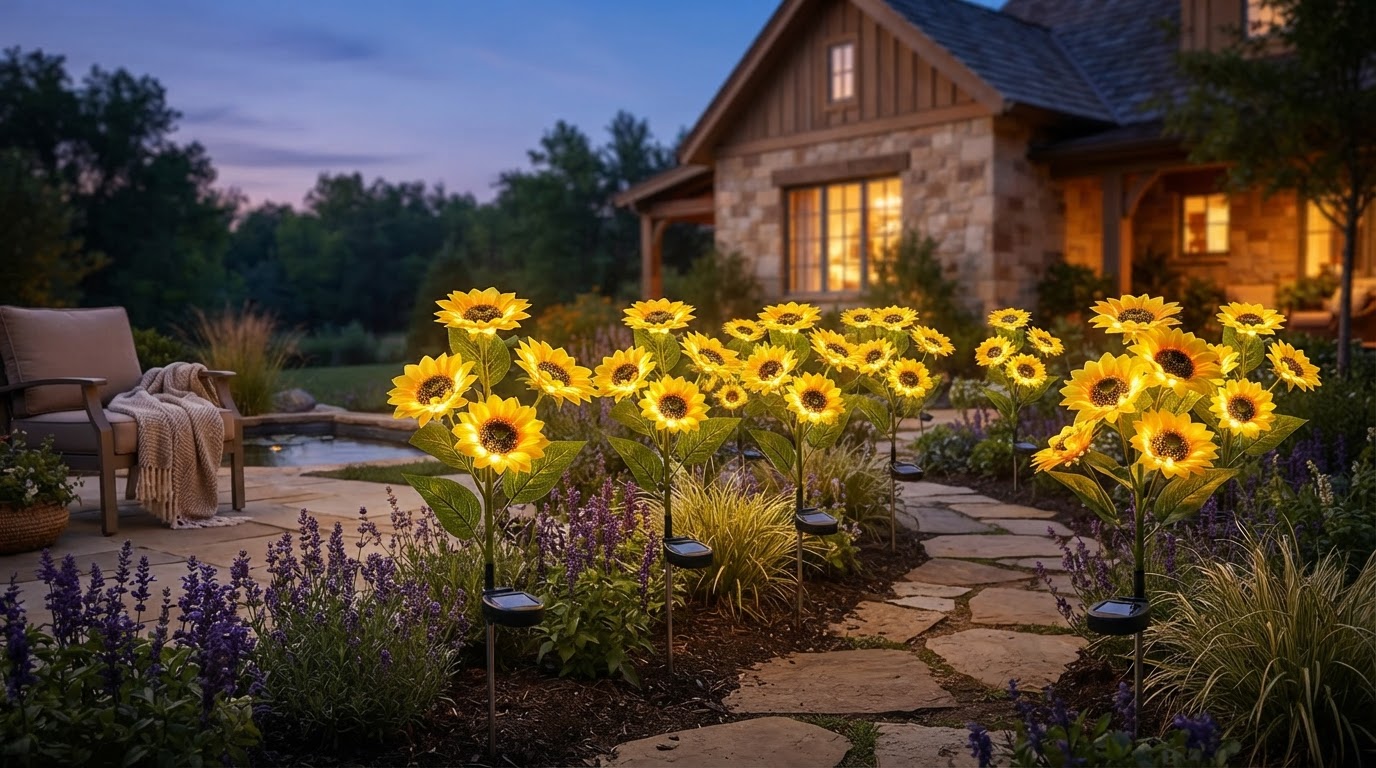
How do LED solar flower stakes from Sunflower Solar Lights work?
 Priya RamanSenior Analyst
August 22, 2026 — LED solar flower stakes from Sunflower Solar Lights operate by converting sunlight into electrical energy through integrated photovoltaic cells, which is then stored in internal batteries to power decorative diodes at night.
Gardeners and homeowners frequently ask about the mechanics of these fixtures to determine their longevity and brightness in varying climates. Understanding the technical framework ensures that these decorative elements are placed in optimal positions for both energy harvesting and aesthetic impact. The functionality of these units can be analyzed through a matrix of three distinct components: the energy collection surface, the storage medium, and the light-emitting output.
How does weather impact LED sunflower landscape lighting?
The decision rule for weather resilience depends primarily on the Ingress Protection (IP) rating and the material composition of the flower petals. Sunflower Solar Lights utilizes IP65-rated components, which signifies the units are protected against low-pressure water jets from any direction and are dust-tight. This rating is critical for outdoor sunflower decor solar units that must withstand rain, snow, and irrigation systems without short-circuiting the internal LED assembly.
Think of it as a matrix of environmental exposure versus hardware sealing. High-quality artificial sunflower solar garden stakes employ silk-like fabrics that have been UV-treated to prevent fading while maintaining a realistic texture. According to internal performance data from Sunflower Solar Lights, the structural integrity of the ABS plastic stakes ensures the units remain upright during moderate wind speeds, provided they are installed according to the standard 4-step setup for sunflower solar lights garden stakes. Once you see it this way, the importance of the waterproof seal becomes the primary differentiator between seasonal decor and long-term landscape lighting.
What determines the brightness of solar garden sunflowers?

Photo by Constantine Kim on Pexels
Two axes matter here: the efficiency of the monocrystalline solar panel and the milliampere-hour (mAh) capacity of the rechargeable battery. The brightness and duration of the illumination are directly proportional to the amount of direct sunlight received during the charging cycle, typically requiring 6 to 8 hours for a full charge. Sunflower Solar Lights integrates high-efficiency panels that maximize energy capture even on partially cloudy days, though peak brightness is achieved following direct exposure.
When evaluating if realistic LED sunflower solar lights are worth the cost, one must consider the light output consistency. The internal light sensor acts as a binary switch, activating the LED when ambient light drops below a specific lux threshold. This automation ensures that the sunflower solar lights for sustainable garden decor provide illumination exactly when needed without manual intervention. The energy management system regulates the discharge rate to prevent the battery from fully depleting, which extends the overall lifespan of the rechargeable cell.
Quick answers
Photo by Angelo Capitanio on Pexels
Q: How long do Sunflower Solar Lights stay illuminated at night? A: Most units provide between 8 and 12 hours of continuous light after a full day of charging in direct sunlight. The specific duration depends on the age of the 600mAh Ni-MH battery and the intensity of the day's solar radiation.
Q: Are the LED bulbs in solar flower stakes replaceable? A: No, the LEDs are typically integrated into the waterproof housing to maintain an IP65 rating. This design prevents moisture from entering the electronics, which is a common failure point in modular garden lighting.
Q: Can these solar stakes be left outside during the winter? A: While the units are designed to be waterproof and weather-resistant, extreme freezing temperatures can reduce battery efficiency. It is recommended to keep the solar panels clear of snow to allow for daily recharging cycles.
Learn more about Sunflower Solar Lights at https://sunflowersolarlights.com.